Materials
Humidity does not stop you sweating. It stops your sweat from working.
The weather app explains half of August. What you put on at 7am explains the rest, and cotton has always been the part that quits first.
Eighty-eight degrees in Phoenix and eighty-eight degrees in New York describe two completely different afternoons, and everyone who has lived through both already knows it. The difference is not in your head, and it is not really about the temperature at all. It is about whether the air around you has any room left to take your sweat.
That is worth understanding properly, because it changes what you should be asking of your clothes. Below is the mechanism, the reason cotton is usually the first thing to fail in it, and what Mack Weldon actually changed in the AIRKNITx Cotton line it launched at the start of this month. The short version: they did not change the fiber. They changed the hole pattern.
OneSweat does not cool you. Evaporating sweat cools you.
The National Weather Service puts it in three flat sentences, and they are the whole foundation of this article:
When the body gets too hot, it begins to perspire or sweat to cool itself off.
When perspiration is evaporated off the body, it effectively reduces the body's temperature.
When the atmospheric moisture content (i.e. relative humidity) is high, the rate of evaporation from the body decreases.
National Weather Service, weather.gov, Heat Index
Read the third sentence twice. On a humid day your body is not failing to sweat. It is sweating exactly as designed and getting nothing back for it. The liquid sits on your skin, the cooling never happens, so your body reads the situation as still too hot and asks for more sweat. That is the loop. It is why a humid 88 flattens people who shrug off a dry 95.
Schematic, not to scale. It illustrates the mechanism described in the National Weather Service passage above.
And it is why the fix is not more sweat, or less. The fix is anything that helps what is already there evaporate.
TwoWhich is where your clothes stop being decoration
Between your skin and the air there is a layer of fabric, and every bit of moisture that leaves you has to get through it. In cool weather this is invisible. In August it is the entire game. Whatever the air will not take, the fabric holds against you.
Cotton's reputation is honestly earned. Dry, it feels like nothing, it does not squeak, it does not smell after a long day, and it does not have that faintly plastic hand that men notice immediately and complain about for years. Nobody buys cotton by accident.
The trouble only starts when it gets wet, and in a humid August it gets wet early. Saturated fabric stops behaving like fabric. It clings, it gets heavy, and it closes off the one thing you needed it to do, which is let air move across skin so that moisture can leave.
The industry's answer has long been to stop using cotton. Move to engineered synthetics, wick the moisture out to the surface where a larger area speeds up evaporation, and accept the trade. Mack Weldon's own best selling underwear takes exactly that route.
ThreeThe trade is admitted in their own feature list, in one word
This is the detail worth stopping on, because it is not marketing language, it is a spec sheet telling on itself. Both products live on mackweldon.com. Both carry a nearly identical bullet list. One bullet is different.
| Feature list, as published | AIRKNITx, the original | AIRKNITx Cotton |
|---|---|---|
| Pouch | Supportive flyless pouch | Supportive flyless pouch |
| Moisture | Moisture-wicking & odor-fighting | Moisture-wicking |
| Airflow | Targeted cool zones | Targeted cool zones |
| Waistband | No-roll waistband | No-roll waistband |
| Legs | Stay-put legs | Stay-put legs |
One word appears on the synthetic pair and quietly disappears on the cotton one. Odor-fighting is a feature you advertise when the material needs it. Cotton does not get that bullet because cotton has never had that problem, and the people writing the bullets know it.
So the real choice a man has been making every summer looks like this. Take the synthetic and stay dry, and manage the smell. Take the cotton and stay comfortable, and be wet by nine in the morning. Both options are a compromise, and both have been the only options on the table.
FourWhat changed is the structure, not the fiber
The advertising line Mack Weldon is running this month is short: the AIRKNITx Cotton pieces are, in their words, engineered with breathable micro mesh. The product page says the same thing in a different register, describing a smooth cotton micro mesh (plus stretch) designed, they say, with New York summers in mind.
Strip out the adjectives and there is an actual engineering decision underneath. Cotton is not the problem, packed cotton is. A conventional jersey knit is a dense continuous surface, so when it wets out there is nowhere for air to pass. A micro mesh knits deliberate openings into the same fabric at small scale, so the surface keeps a set of channels whether it is dry or damp.
Cross section, schematic and not to scale. Mack Weldon describes the AIRKNITx Cotton fabric as a smooth cotton micro mesh.
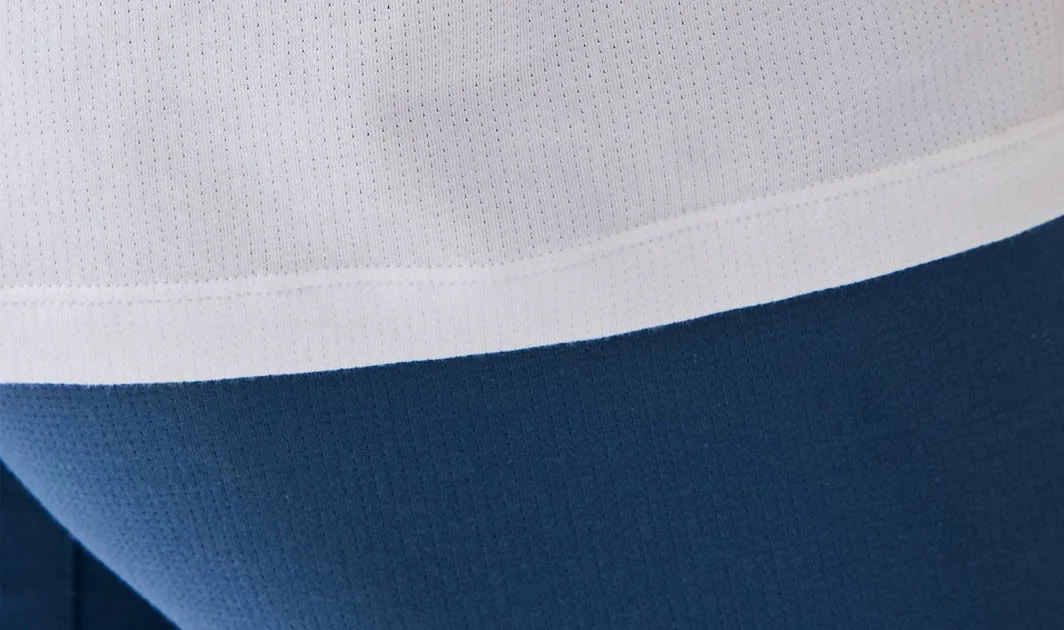
You do not have to take that on faith, because it is visible in their own photography. The picture at the top of this page is a straight crop from a product image on mackweldon.com. The regular field of tiny holes is not a print or a texture effect. It is the knit.
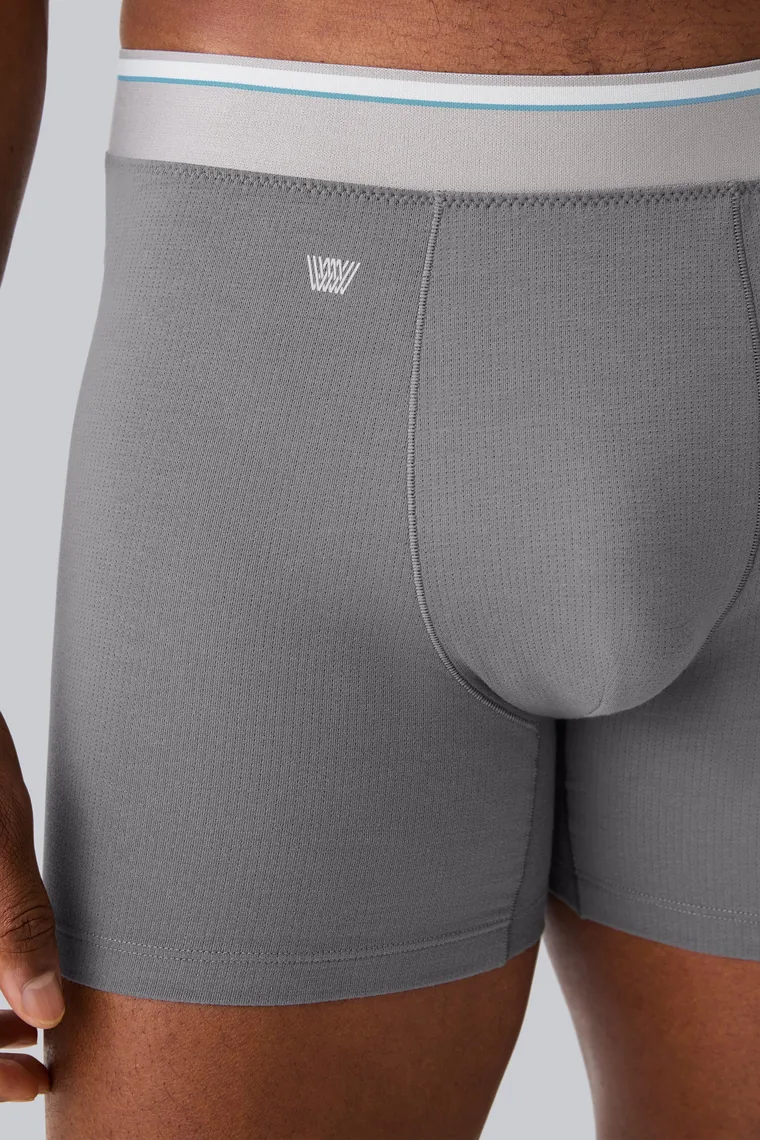
This is why the name works. It is the same cotton that men keep going back to, cut with 9 percent elastane so it moves, but knitted so that the fabric never becomes a closed surface. The fiber stays. The wall goes.
FiveRead the label, not the product page
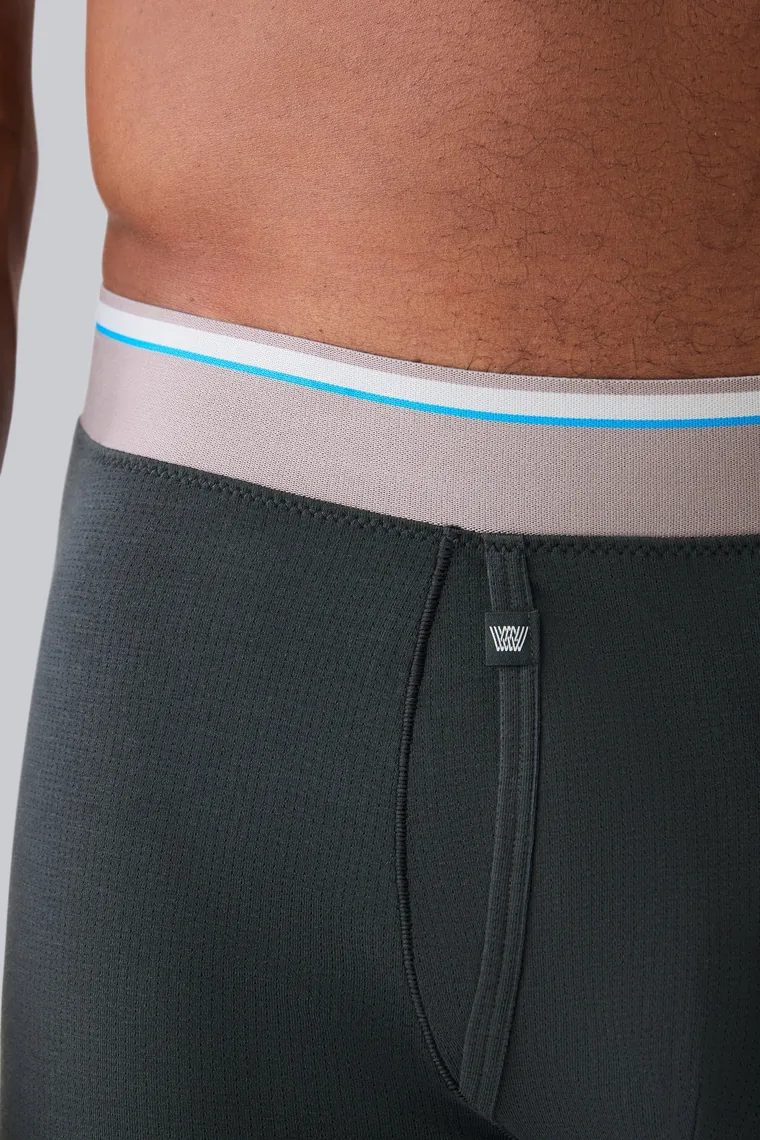
Here is the part almost nobody does, and it is the most useful thing on this page. The product page gives you one line of composition. The garment itself gives you three, and Mack Weldon photographed it clearly enough to read.
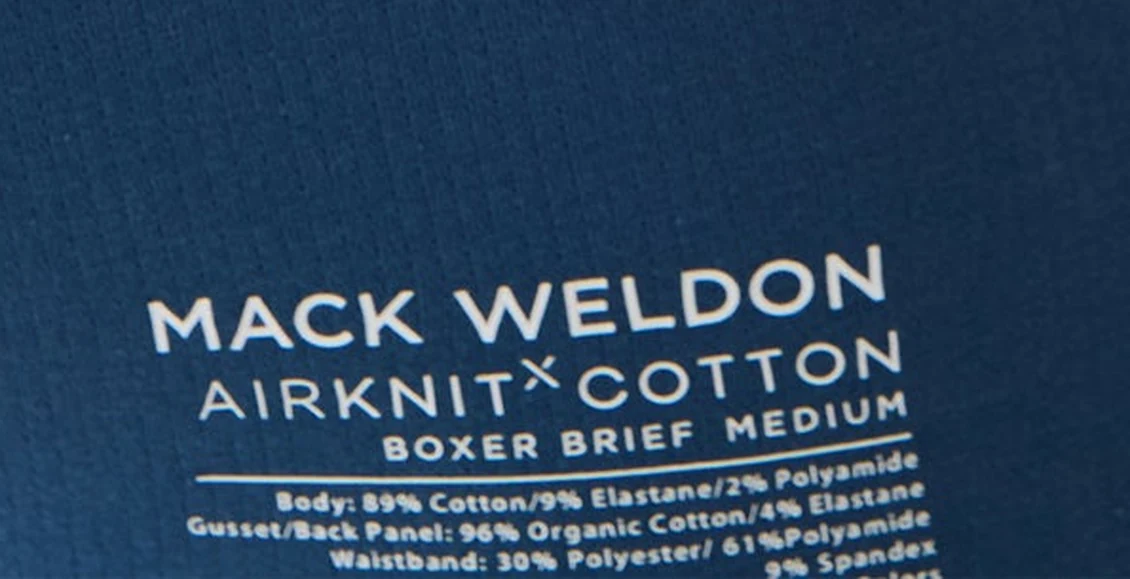
Gusset/Back Panel: 96% Organic Cotton / 4% Elastane
Waistband: 30% Polyester / 61% Polyamide / 9% Spandex
Three fabrics, three jobs. That is a considerably more interesting garment than the single line on the website suggests, and each choice reads sensibly against the humidity problem.
- The body panel is the breathing surface89 percent cotton, 9 percent elastane so it recovers instead of bagging out, and 2 percent polyamide. Polyamide is the fiber family nylon belongs to, which is why the website line says nylon and the label says polyamide. Same material, two names.
- The gusset and back panel go further into cotton, not less96 percent organic cotton with 4 percent elastane, and no polyamide at all. The panels that sit closest against you carry the highest cotton content in the garment, and the only organic cotton on the label.
- The waistband is not cotton at all30 percent polyester, 61 percent polyamide, 9 percent spandex. The waistband has one job, which is to hold its shape and not roll. It is the only part of the garment with no cotton in it whatsoever.
That last point is the one that tells you the line was engineered rather than assembled. A brand chasing a cotton claim would have run cotton everywhere and let the waistband sag by October.
The rest of the spec sheet
Four features, read against one problem
Every bullet Mack Weldon publishes for this product makes more sense once you accept that the enemy is trapped moisture rather than heat.
- Targeted cool zonesTheir term, used on both the cotton and the performance version. The word doing the work is targeted, which implies the openness is placed rather than spread evenly.
- Moisture-wickingMoving liquid off the skin and onto the outer surface of the fabric, where there is more area exposed to air. It does not defeat humidity. It gives evaporation a better chance.
- No-roll waistbandA waistband that rolls doubles itself into a thicker band pressed against the waist. Keeping it flat is a comfort feature before it is anything else.
- Stay-put legsLegs that ride up bunch fabric exactly where you least want a doubled layer. Two of the reviews below are about precisely this.
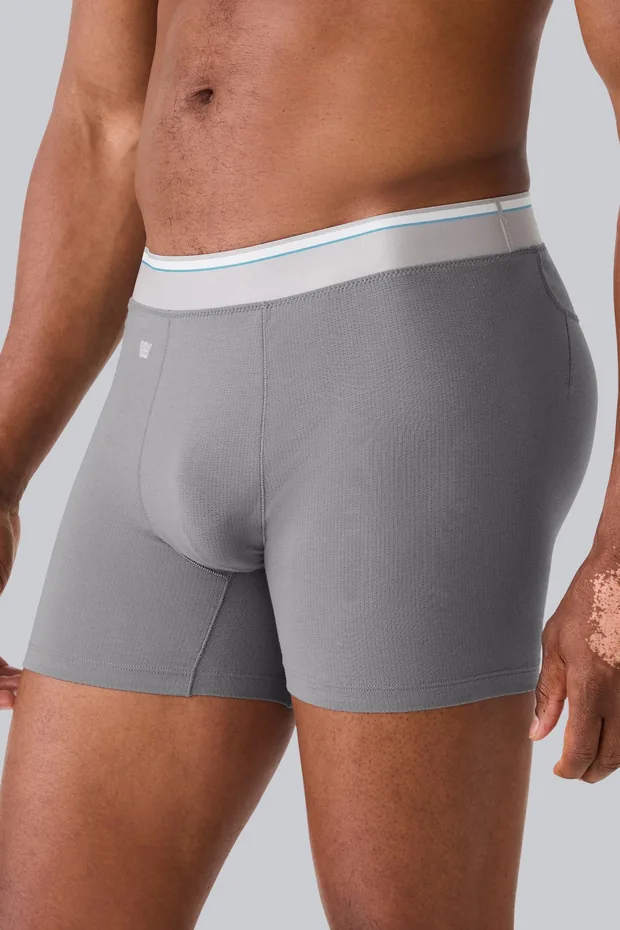
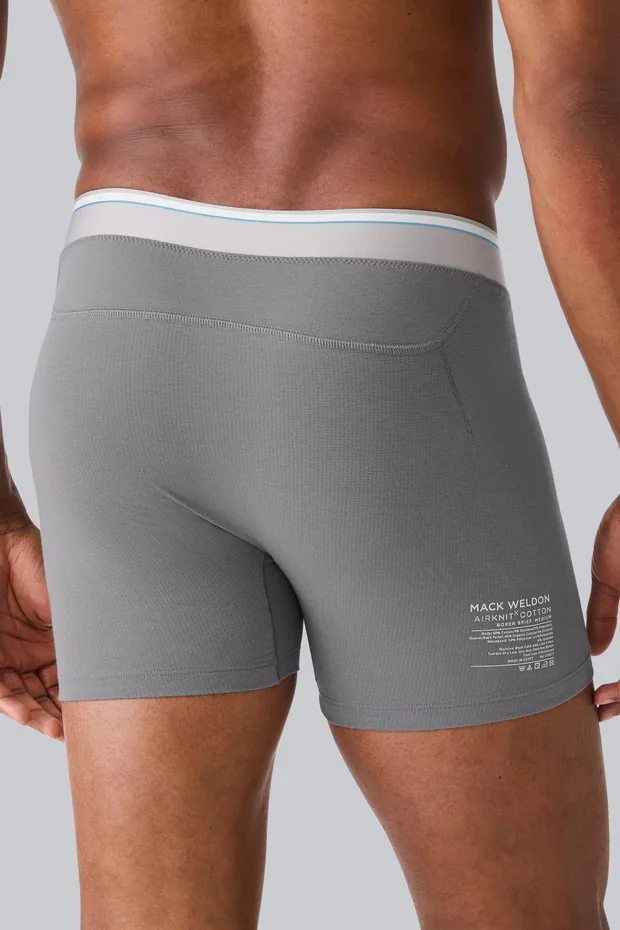
Where it sits next to the one that has sold over a million
It would be easy to present the new fabric as a replacement. Mack Weldon does not, and the honest version is more useful. On the AIRKNITx Cotton product page they leave a pointer in the other direction: Looking for the same underwear in a performance fabric? Try the original AIRKNITx.
Those two products cost the same. Here is the comparison, entirely from their published pages.
| AIRKNITx, the original | AIRKNITx Cotton | |
|---|---|---|
| Boxer brief price | $34 | $34 |
| Body composition | 86% Polyamide / 14% Elastane in HD Solids; 50% Polyamide / 33% Polyester / 17% Elastane in Heathers | 89% Cotton / 9% Elastane / 2% Nylon |
| Odor | Odor-fighting is listed as a feature | Not listed, and not needed |
| Track record | 1+ million sold, 11,203 reviews at 4.58 | Launched this month, no reviews yet |
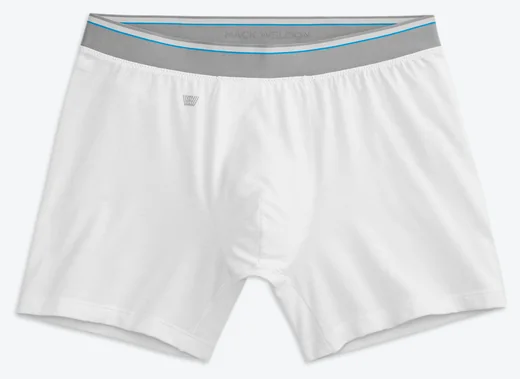
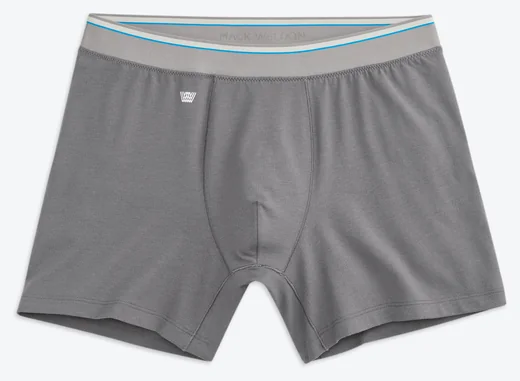
| Colors | Heathers and HD Solids, many | Bright White, Phantom, Bering Sea, Total Eclipse, Steel |
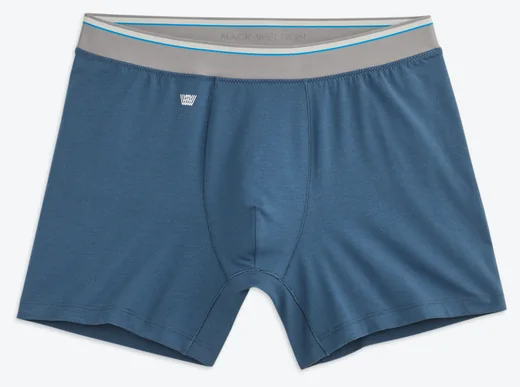
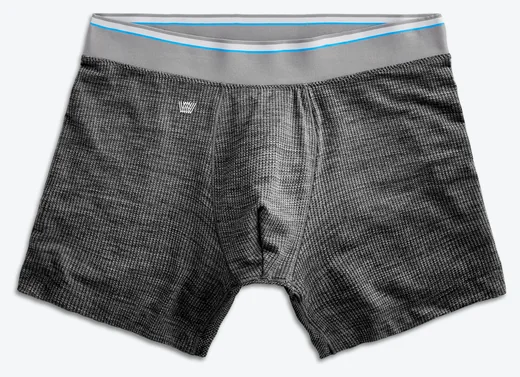
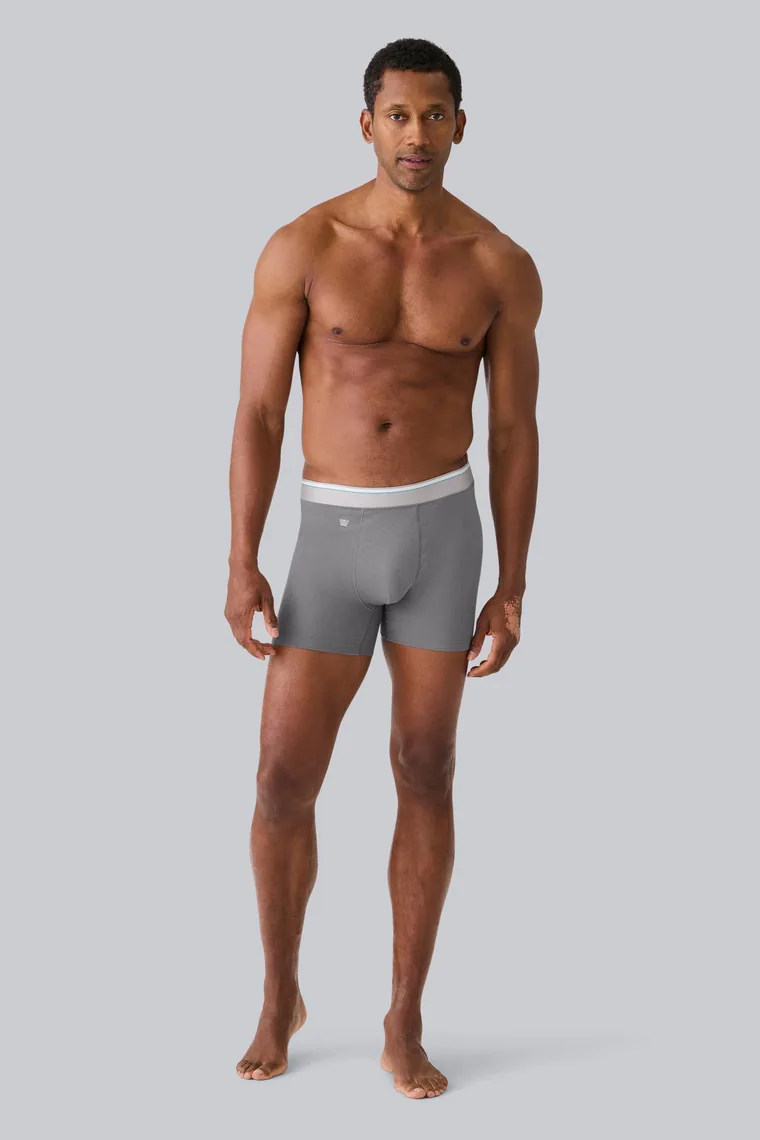
The undershirts make the difference easier to see, because both are photographed in white at the same angle.
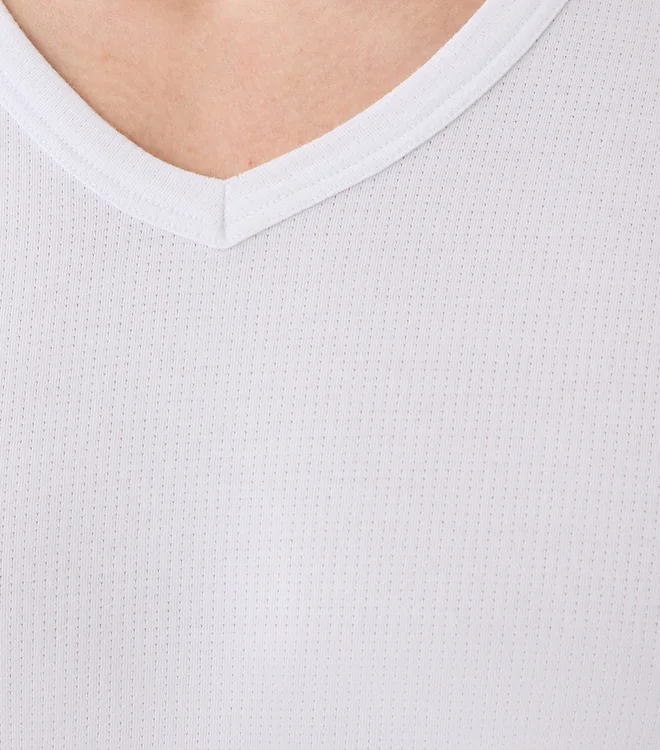

Same brand, same price, same cut, two different surfaces. If you have owned the original and liked everything about it except the way synthetic fabric feels against skin on a bad day, the cotton version is aimed squarely at you. If you sweat hard and want the most aggressive moisture management available, the original is still the one with a million pairs behind it.
SevenWhat buyers of the original actually say, complaints included
The cotton line is days old and has no reviews yet, so there is nothing honest to quote about it. What does exist is the review record on the fabric platform it grew out of, and it is unusually large.
Junip, the review platform they use, publishes an automatically generated summary of the pattern across all of them:
Reviewers consistently praise the AIRKNITx Boxer Briefs from Mack Weldon for their exceptional comfort, lightweight and breathable fabric that effectively wicks moisture, and their durable, flattering fit that prevents bunching during workouts or daily wear.
Auto-generated review summary, mackweldon.com product page
Individual reviews are more useful than a summary, especially the ones on temperature.
Best underwear for all day comfort, especially when it's hot out.
Erik C. · Verified buyer · size X-Large
Very good summer weight boxer briefs.
Greg R. · Verified buyer · size Medium
Excellent. Love the material. I have numerous pairs of older boxer briefs and these are next level.
Jeff R. · Verified buyer · size Large
And the criticisms, which are the reason to trust the rest. Two of the most recent reviews are about fit rather than fabric, and they are the same complaint:
Fabric is very thin and breathable, the quality is great. Only issue i have is that it doesn't flush into the crouch enough and sit bit weirdly.
Omrie · Verified buyer · size Large
Really enjoy the feel of the boxer briefs. They do still have a tendency to rise up, but outside of that they feel like really good quality underwear
Isaac A. · Verified buyer · size Medium
Both are size-and-cut issues on a flyless pouch, which is worth knowing before you order. The third complaint has a straightforward answer:
I didn't see this Boxer Brief didn't have a fly. If we're told anywhere that it doesn't, I didn't see it. Do you tell us this?
Steve M. · Verified buyer · size Medium
Fair complaint, and Mack Weldon has already built the answer. The AIRKNITx Cotton Boxer Brief comes in a With Fly version at the same $34. It is a separate product rather than an option on the page, which is exactly why people miss it.
The practical part
Three pieces exist in AIRKNITx Cotton today. Two of them went live on August 5, the undershirt a week earlier.
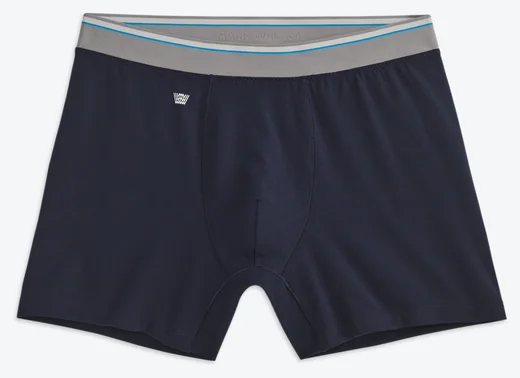
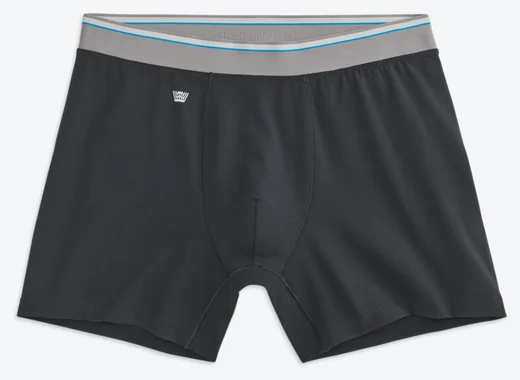
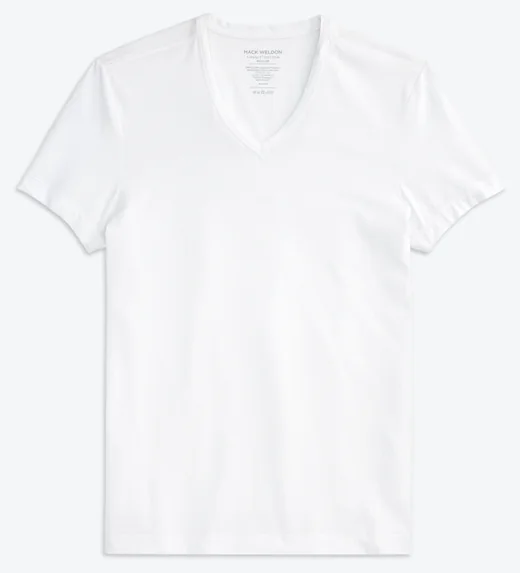
Colors
The boxer briefs come in five. The undershirt, for now, is white only.
Sizing, in their words
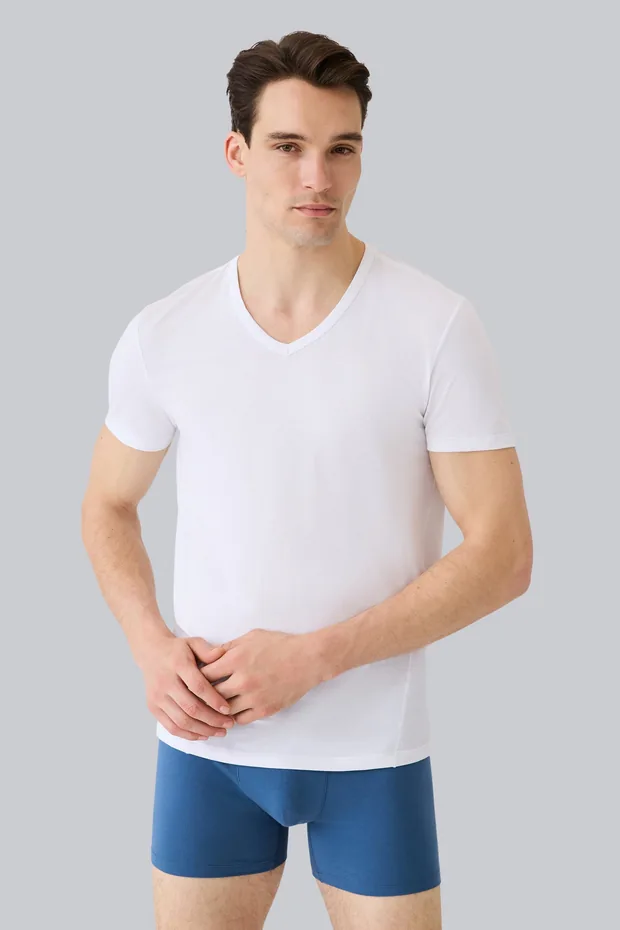
The product page is unusually direct about it. True to size. Size up for a looser fit. For slim-fitting pants, we suggest sizing down. The model in the photographs is 6 feet 1 inch in a Medium. Given the two ride-up complaints above, that guidance is worth following rather than guessing.
Care
Machine wash cold with like colors, tumble dry low. Nothing unusual, which matters more than it sounds for an 89 percent cotton knit with a fine mesh structure in it.
So, the short answer
You cannot do anything about the dew point. You can decide whether the layer sitting against your skin all day is a closed surface or an open one, and that decision is made once, at a fairly ordinary price, in a drawer you restock every couple of years anyway.
Mack Weldon's summary of it is three words long, and after all of the above it earns them. Humidity's worst nightmare.
Three products, $34 and $42, on their site
See the AIRKNITx Cotton collectionOr compare against the original AIRKNITx, 11,203 reviews at 4.58